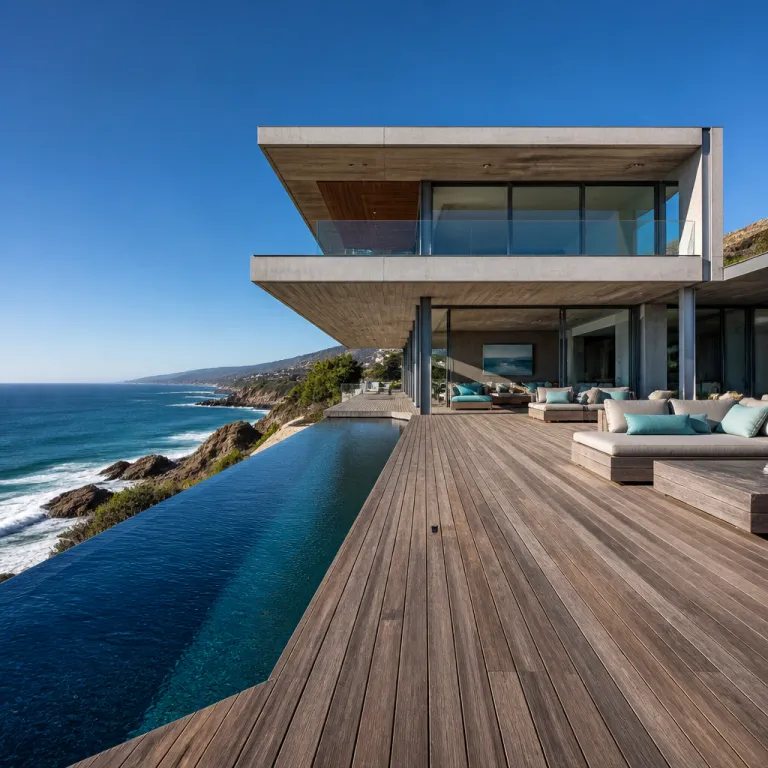
Architect-designed vacation rental stays: why they are worth planning a trip around
Why architect designed vacation rental stays are worth planning a trip around
Some travelers now choose the building first and the destination second. Architect-designed vacation rental stays turn a simple house into a cultural experience, where every view, corridor, and terrace has been drawn with intent. When you book this kind of property, you are not just a guest, you are briefly inhabiting a piece of design history.
Architectural rental pioneers such as Robert A.M. Stern Architects, Richard Meier & Partners, Rafael Viñoly Architects, Davis Brody Bond, GF55 Architects, Corsini + Stark, Rafii Architects Inc., GREC Architects, and William Tamminga Architects have already proved how thoughtful design can elevate everyday living. Their work on projects like 261 Hudson in New York, One Waterline Square on Manhattan’s West Side, NEMA Chicago, One Hudson Yards, and Bridgewater in Vancouver is documented in public project portfolios and shows how innovative design, sustainable materials, and advanced construction techniques can transform dense urban sites into calm, light-filled spaces. The same mindset now shapes architect-designed vacation rentals, where the goal is to enhance landscapes rather than dominate them.
For the solo explorer, this shift matters because it changes what “top” means in a listing. Instead of chasing the highest rating or the flashiest pool, you are looking for a villa or cabin where the layout, materials, and light create a private retreat that feels restorative. Architectural integration has become the quiet new luxury, especially in places where the natural setting — a valley, a desert plateau, or a forested lakeshore — is as important as the walls around you.
Architectural integration and biophilic calm in luxury vacation rentals
Architectural integration means the rental feels grown from its surroundings, not dropped onto them. In architect-designed vacation rental stays, you see this when a desert house in Yucca Valley uses low profiles and earthy plaster so the property dissolves into the valley at dusk, or when a lakeside cottage angles its windows so the view is framed by trees rather than car parks. This is the same design philosophy that shapes biophilic rentals where nature is not just the view but the architecture itself, a trend explored in depth in our guide to biophilic rental properties.
Architects working on high-end vacation rentals borrow tools from multifamily projects such as NEMA Chicago or One Hudson Yards, where 3D modeling software, energy-efficient systems, and high-quality materials are standard. Eco-friendly designs and smart home integration are no longer urban luxuries, they are baseline expectations in a modern villa or tree house that markets itself as a private retreat. When these methods are applied to design-led retreats, the result is often a place to spend slow days where cross ventilation, natural light, and tactile finishes do more for your nervous system than any oversized hot tub.
This neuroaesthetic calm is especially powerful in nature-heavy locations. A cabin near a national park, a cottage above Mirror Lake, or a casa on a Costa Rica hillside can all use simple mid-century lines, generous overhangs, and honest materials to blur the boundary between inside and out. The most successful architect-designed rentals feel like they are listening to the landscape, whether that landscape is a rocky coast, a dense village lane, or a quiet valley floor.
From Frank Lloyd Wright to contemporary masters: when the architect shapes the stay
Some architect-designed vacation rental stays are directly linked to architectural legends, and those are the ones that justify a dedicated trip. Frank Lloyd Wright’s influence on residential design is visible worldwide, but staying in a property connected to his work or his ideas turns an overnight into a pilgrimage. The Seth Peterson Cottage on Mirror Lake in Wisconsin, designed by Seth Peterson and completed posthumously with oversight from Taliesin Associated Architects, is widely described in preservation sources as a compact lesson in how a small house can feel monumental when it is perfectly aligned with its site.
Nearby, the Palmer House in Ann Arbor — a Frank Lloyd Wright Usonian design documented by the Frank Lloyd Wright Foundation — shows another side of the Wright legacy, with low-slung roofs and long horizontal lines that echo the surrounding woodland. Guests who book these properties are not just chasing a high rating or a photogenic fire pit, they are seeking immersion in a design language that has shaped everything from the mid-century cabin to the modern desert house. The Seth Peterson Cottage and similar rentals demonstrate how a carefully orchestrated view, a precise ceiling height, and a considered material palette can make even a modest place feel like a private retreat.
Contemporary architects bring the same rigor to new vacation rentals in places as varied as Costa Rica, Yucca Valley, and San Roque. A villa in Costa Rica might use deep verandas and cross breezes to frame the jungle as a living backdrop, while a house in San Roque leans on stone, limewash, and shaded courtyards to cool the interior naturally. In Yucca Valley, desert houses inspired by Wrightian principles often tuck into the terrain, using low walls and sheltered patios so the guest experiences the desert as a protective embrace rather than a harsh exposure.
How to actually find architect designed vacation rental stays on booking platforms
Most booking platforms still make it surprisingly hard to filter for architect-designed vacation rental stays. You can sort by rating, price, or number of bedrooms, but there is rarely a dedicated architecture filter, which means you need to read between the lines of each property description. Start by searching for the architect’s name, then scan for phrases like “award-winning design”, “architect-owned”, or references to specific studios such as Robert A.M. Stern Architects, Richard Meier & Partners, Rafael Viñoly Architects, or Davis Brody Bond.
Look closely at the photos and floor plans rather than relying on the headline or the “top” badge. A true design-led villa, cabin, or cottage will show consistent detailing, from window proportions to built-in storage, and the view will be treated as part of the composition rather than a backdrop. On platforms with keyword search, combine terms such as “architect designed cabin”, “Frank Lloyd Wright inspired house”, or “design-led villa near national park” with your destination, then refine by rating and recent reviews so you are not relying on old photos or outdated descriptions.
For special occasions, such as planning a celebration or elopement, architecture becomes even more critical because the house itself frames your memories. Our guide on how to choose the perfect wedding rental explains how to read between listing photos and guest reviews to understand flow, privacy, and light. Apply the same lens when you shortlist your favorite architect-designed properties, and you will quickly see which places spend their budget on genuine design quality and which rely on staging and props.
Reading the details: layout, materials, and the feel of the stay
Once you have a shortlist of architect-designed vacation rental stays, the next step is to decode how they will actually feel to inhabit. Layout is your first clue, because a well-planned house or villa will separate social zones from quiet corners, giving a solo traveler or small group the option to retreat without leaving the property. As a simple checklist, look for at least one quiet bedroom away from the main living area, a bathroom that does not require walking through a social space at night, and layered outdoor areas — a shaded terrace, a pool deck, maybe a fire pit or hot tub — rather than a single exposed patio.
Materials tell you almost as much as location. A modern cabin near a national park that uses timber, stone, and lime plaster will age gracefully, while a cottage in a coastal village with thin finishes and generic tiles will feel tired quickly. In desert locations such as Yucca Valley or a valley near San Roque, the best desert houses use thick walls, deep reveals, and earthy tones so the guest experiences a stable indoor climate even when the sun is intense.
Pay attention to how the listing describes views and thresholds. A tree house that floats among trunks, a casa above Mirror Lake, or a Costa Rica hillside retreat should all show how you move from interior to exterior without abrupt level changes or awkward steps. When a property description mentions that it was created in partnership with real estate developers, interior designers, and construction firms known for projects like Bridgewater in Vancouver or Porte Apartments in Chicago — both publicly credited to established architecture teams — you can usually trust that the same innovation, the integration of modern design with functionality, underpins the rental.
Urban architectural rentals versus nature immersed retreats
Architect-designed vacation rental stays fall broadly into two camps, and understanding the difference helps you choose the right place for your trip. Urban architectural rentals, often in cities where award-winning architects have already shaped the skyline, give you access to amenities such as fitness centers, rooftop terraces, and concierge-style services. Properties influenced by developments like NEMA Chicago, One Hudson Yards, or 261 Hudson often sit in mixed-use neighborhoods where cafés, galleries, and parks are within a few hundred metres.
Nature-immersed retreats, by contrast, trade density for immersion. A cabin near a national park, a cottage on Mirror Lake, or a villa in Costa Rica’s hills will rarely offer a staffed lobby, but they compensate with silence, dark skies, and a direct relationship to the landscape. In these properties, a simple fire pit, a carefully placed hot tub, or a shaded pool terrace becomes the social heart of the stay, and the rating often reflects how well the architecture frames those elemental experiences.
Both types can deliver genuine luxury if the design is coherent. In a compact urban casa, luxury might mean triple-glazed windows, precise lighting, and a view that edits out the chaos below, while in a desert house in Yucca Valley or a stone dwelling in San Roque, it is the feeling of being held by the terrain. Whether you choose a top-floor loft or a tree house in the forest, the most rewarding architect-designed vacation rental stays share one trait, they treat you as a temporary inhabitant of a carefully considered place, not just a guest passing through.
FAQ
What makes a rental property “architect designed” rather than just stylish
A rental qualifies as architect designed when a named architect or studio has shaped the structure, layout, and core materials, not just the décor. Stylish properties often rely on furniture and accessories, while architect-designed vacation rental stays show consistent thinking in window placement, circulation, and how the building meets the site. When in doubt, look for an architect’s name, references to specific projects, or mentions of collaboration with established firms.
How can I verify that a vacation rental was created by an award winning architect
Start by checking the listing for the architect’s full name and any project references. You can then cross-check those names with publicly available information about projects such as 261 Hudson, One Waterline Square, NEMA Chicago, One Hudson Yards, or Bridgewater, which are documented works by award-winning architects in developer and architect portfolios. If the host is vague about the design team, treat the claim cautiously and focus on the quality you can see in plans and photos.
Are architect designed vacation rental stays always more expensive
Architect-designed properties often sit at a premium because of higher construction costs and limited supply, but they are not always the most expensive option in a destination. Industry reports on short-term rentals suggest that distinctive design can command a price uplift, yet in some regions a compact mid-century cabin or a small cottage by a lake can still cost less per night than a large but generic villa. Value comes from how well the house functions and how memorable the experience feels, not just from the nightly rate.
What amenities should I expect in a luxury architect designed rental
Many architect-designed vacation rental stays include thoughtful amenities such as well-equipped kitchens, integrated storage, and flexible lighting rather than only showy features. In higher-end properties, you can also expect elements inspired by multifamily developments, such as fitness areas, shared or private pools, and sometimes concierge-style services. The most important amenity, however, is often intangible, a layout and material palette that make the property feel calm, intuitive, and easy to live in.
How far in advance should I book an architect designed rental
Because architect-designed vacation rental stays are relatively rare and attract design-conscious travelers, they tend to book out earlier than standard properties. Data from major platforms indicates that unique, high-rated listings in popular destinations often secure peak-season reservations several months ahead, so for iconic houses such as the Seth Peterson Cottage or the Palmer House, securing dates six to twelve months ahead is prudent. Even for less famous rentals, researching property locations, checking availability in advance, and exploring surrounding neighborhoods early will give you the best choice of dates and rates.